


 SetPaying for Seoul transport
 Hi, I’m SeoulAslan
How to Ride a Seoul Bus: Colours, Fares, Tapping Out (2026)
Checked Sept 29, 2026
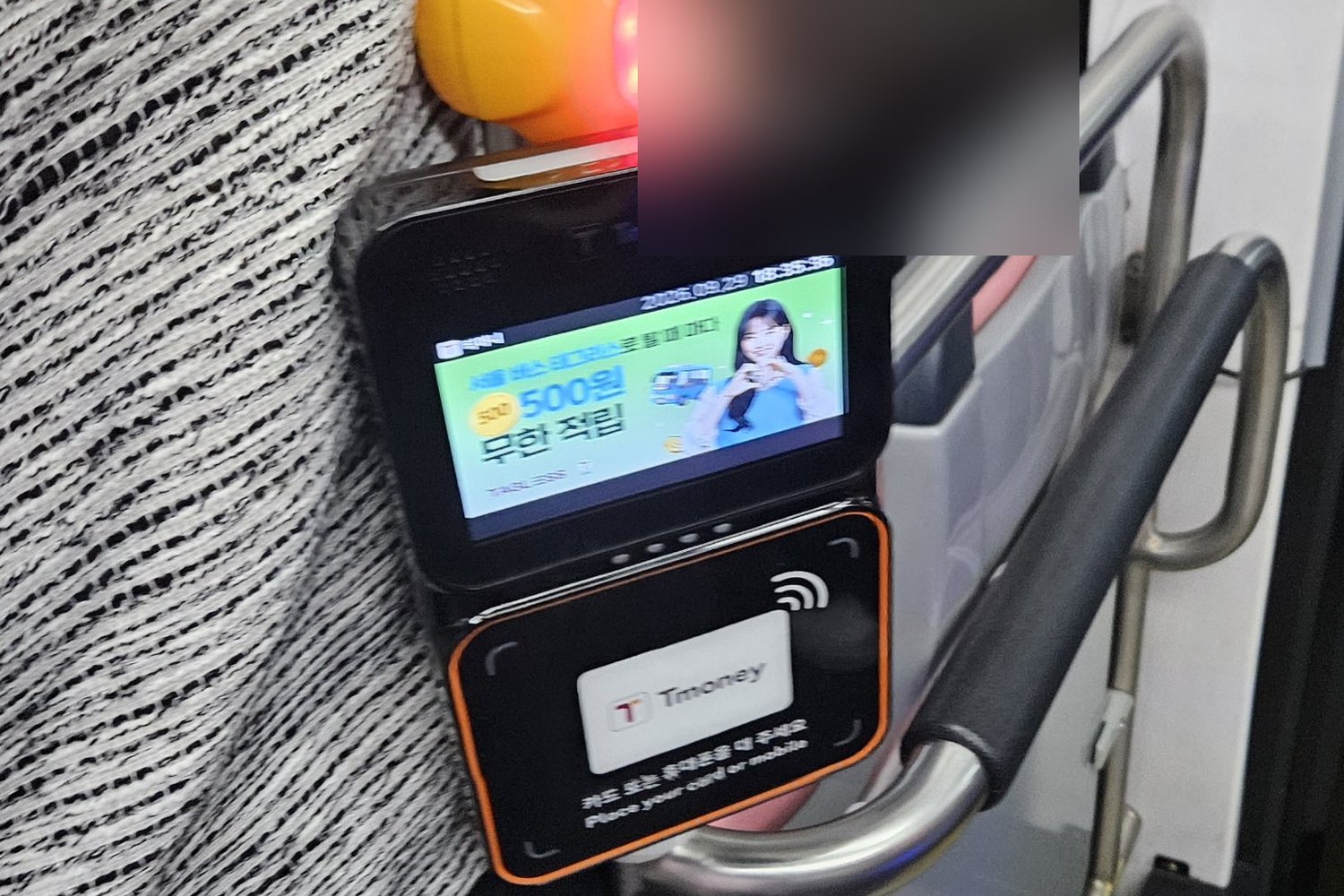
Get on at the front and tap your transit card. Press a red stop button before your stop. Tap your card again on the reader by the back door as you get off. That last tap is the one visitors skip, and it's what keeps your transfer to the next bus or subway cheap. An adult ride on a blue or green Seoul bus costs 1,500 won, the same with a card or cash, but only a card gets the transfer discount.
Living abroad for about seven years, six in Vietnam and one in Thailand, taught me to check a few things before every trip: does cash work, can I just tap, where do I buy a pass. For Seoul's buses, the answers are below.
Jump to: Bus colours · Getting on · The stop button · Why tap out · Cash · Night buses · Airport and Gyeonggi buses · FAQ
What do the bus colours mean in Seoul?
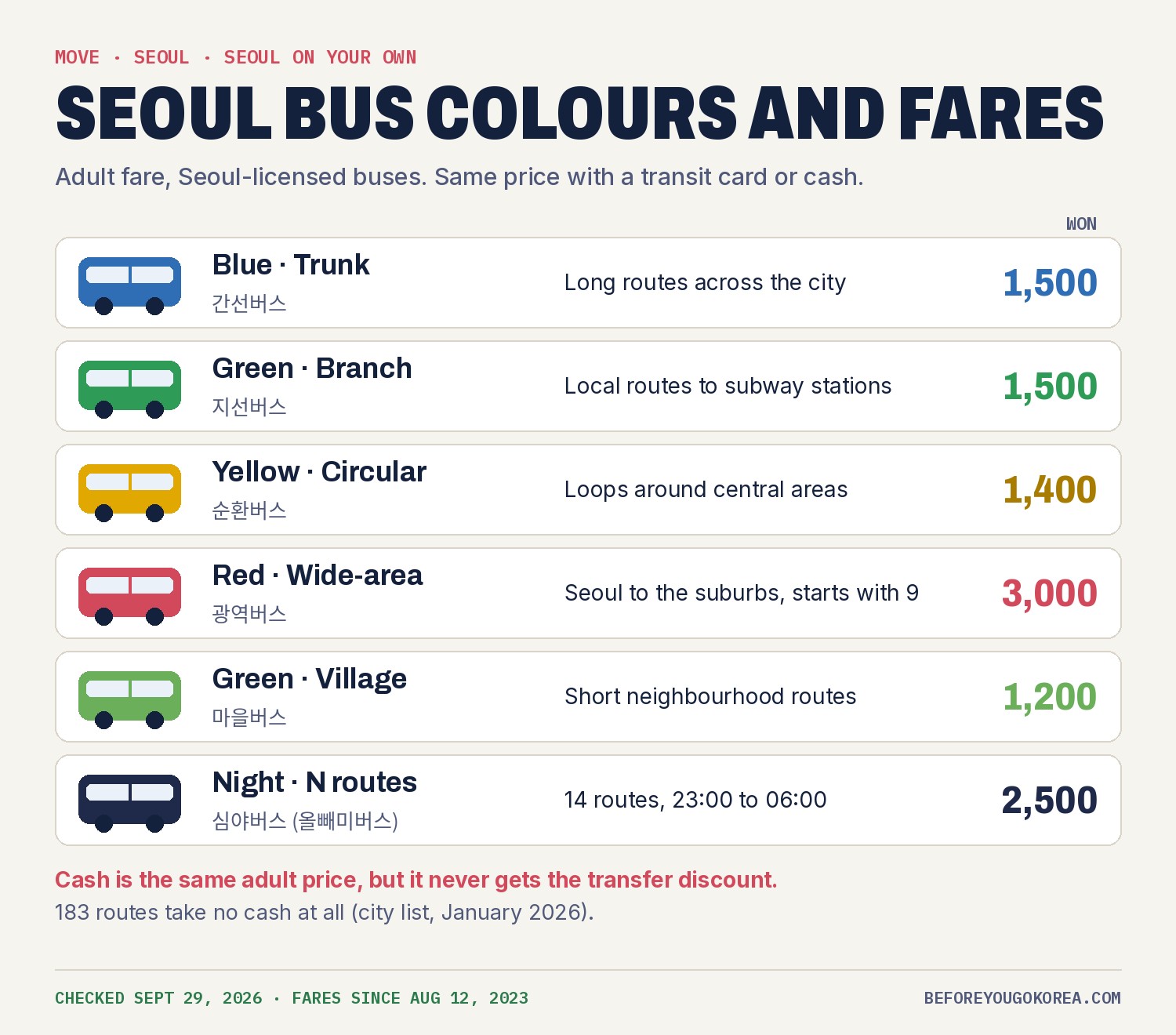
The colour tells you what kind of route it is: blue, green, yellow or red, plus small village buses and night buses.
- Blue, trunk (간선버스): long routes that cross the city and link the outskirts with the centre. Adult fare 1,500 won.
- Green, branch (지선버스): shorter routes that feed subway stations and the blue buses. 1,500 won.
- Yellow, circular (순환버스): loops around central areas. 1,400 won.
- Red, wide-area (광역버스): between Seoul and the suburbs. Route numbers start with 9. 3,000 won.
- Village buses (마을버스): small green buses on short neighbourhood routes. 1,200 won.
- Night buses (심야버스), numbers starting with N: 2,500 won. More on these below.
The numbers carry information too. They show which part of the city a route starts and ends in. You don't need to learn the system. Put your destination into Naver Map or Kakao Map, and it tells you the bus number and the stop.
Youth and child fares are lower: on blue and green buses, 900 won and 550 won by card. This guide uses adult fares.
How do I get on and pay?
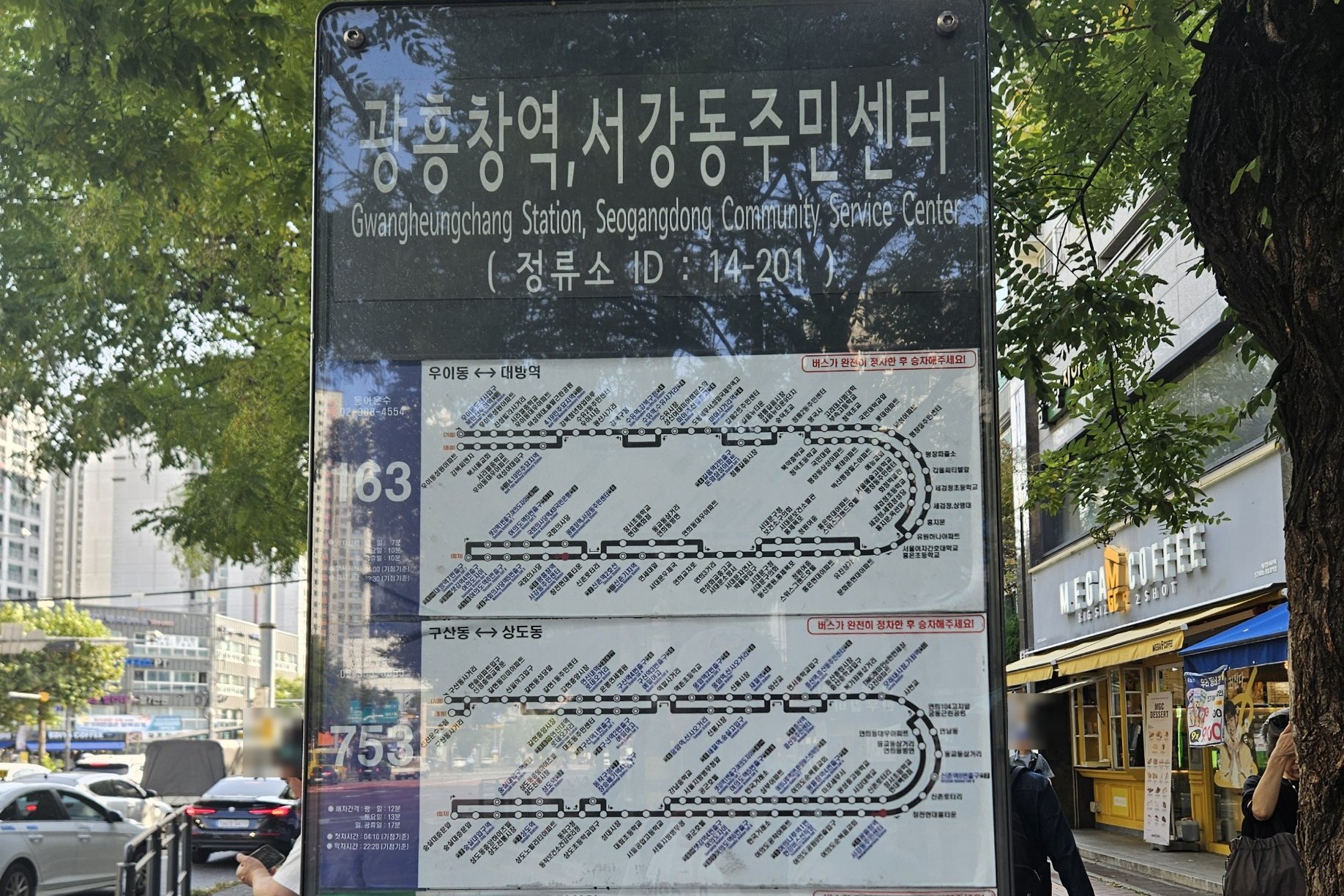
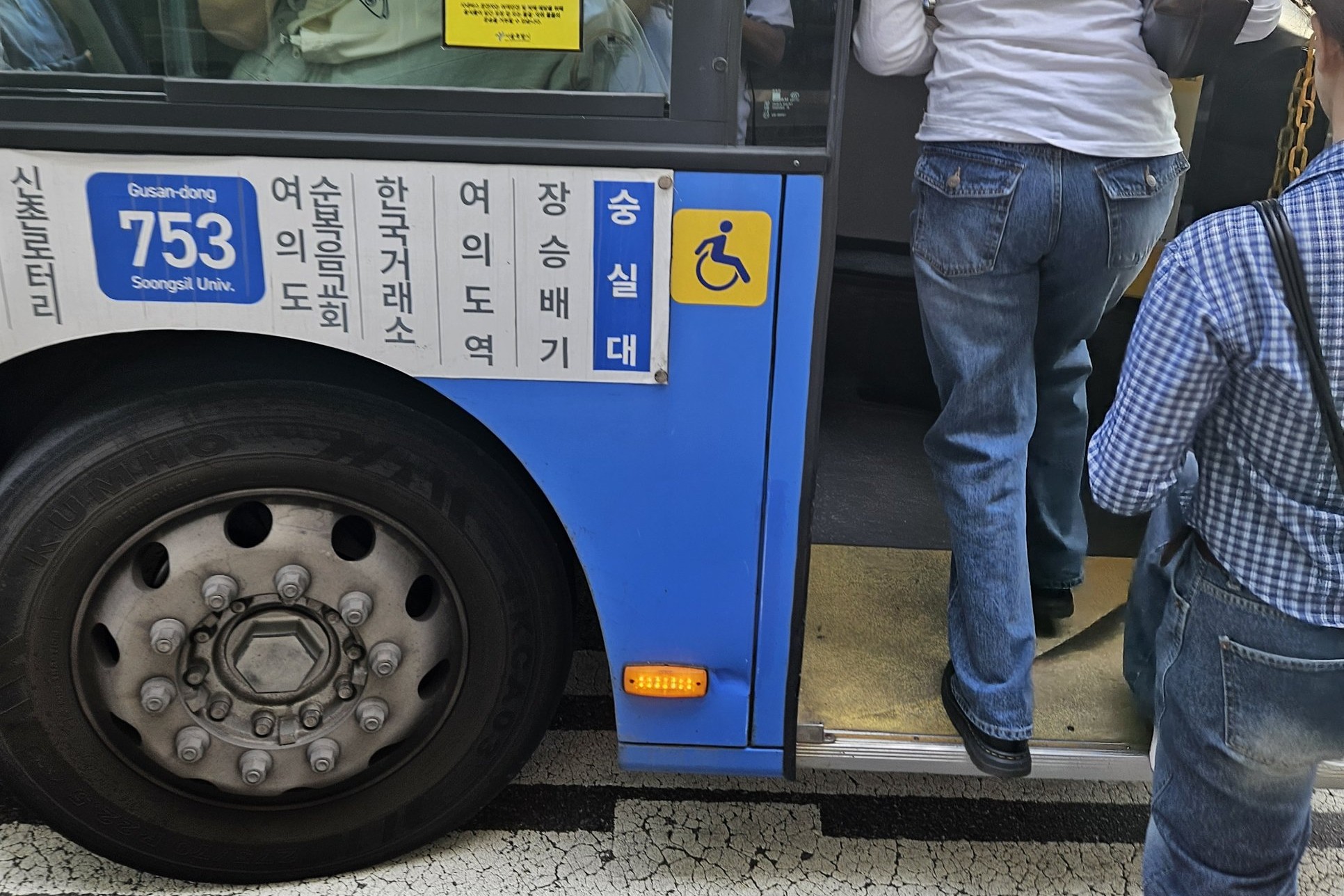
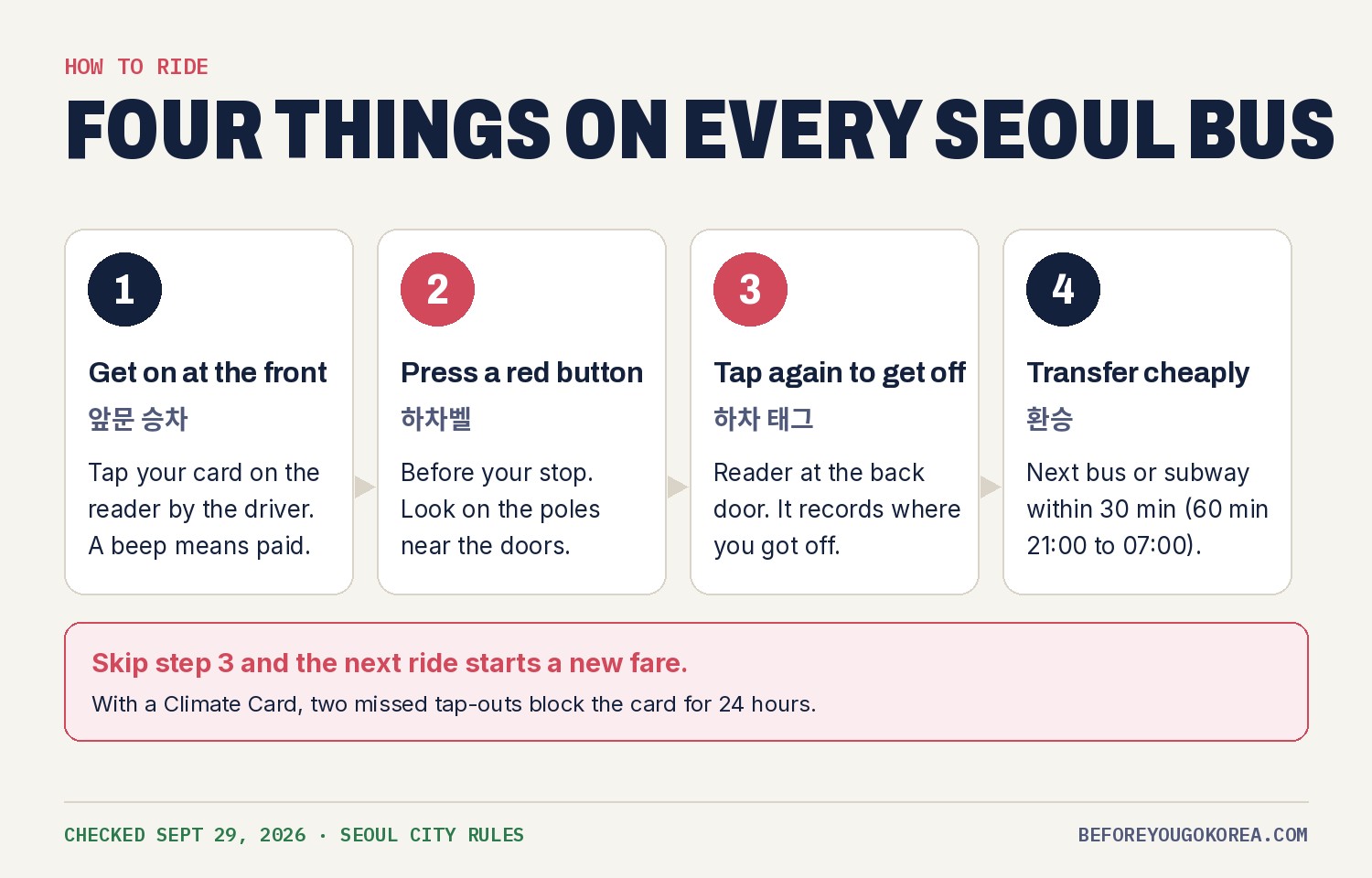
- Get on through the front door (앞문).
- Tap your card on the reader next to the driver and wait for the beep.
- Hold only one transit card to the reader. With two cards in one wallet, the reader can pick the wrong one or refuse both.
What counts as a card: a T-money card, a Climate Card with a tourist pass loaded, or T-money on your phone. The reader in my photo above says "Place your card or mobile".
Your own Visa or Mastercard won't work on that reader yet. Seoul city buses are planned to start taking foreign contactless cards in January 2027. I wrote about that in Can you tap a contactless card on Seoul transit?
One more rule people don't expect: no open takeaway drinks. Since 2018, Seoul buses can refuse passengers carrying drinks in disposable cups, open cans or bottles, or food with a straw in it. Finish your coffee at the stop.
How do I tell the bus to stop?
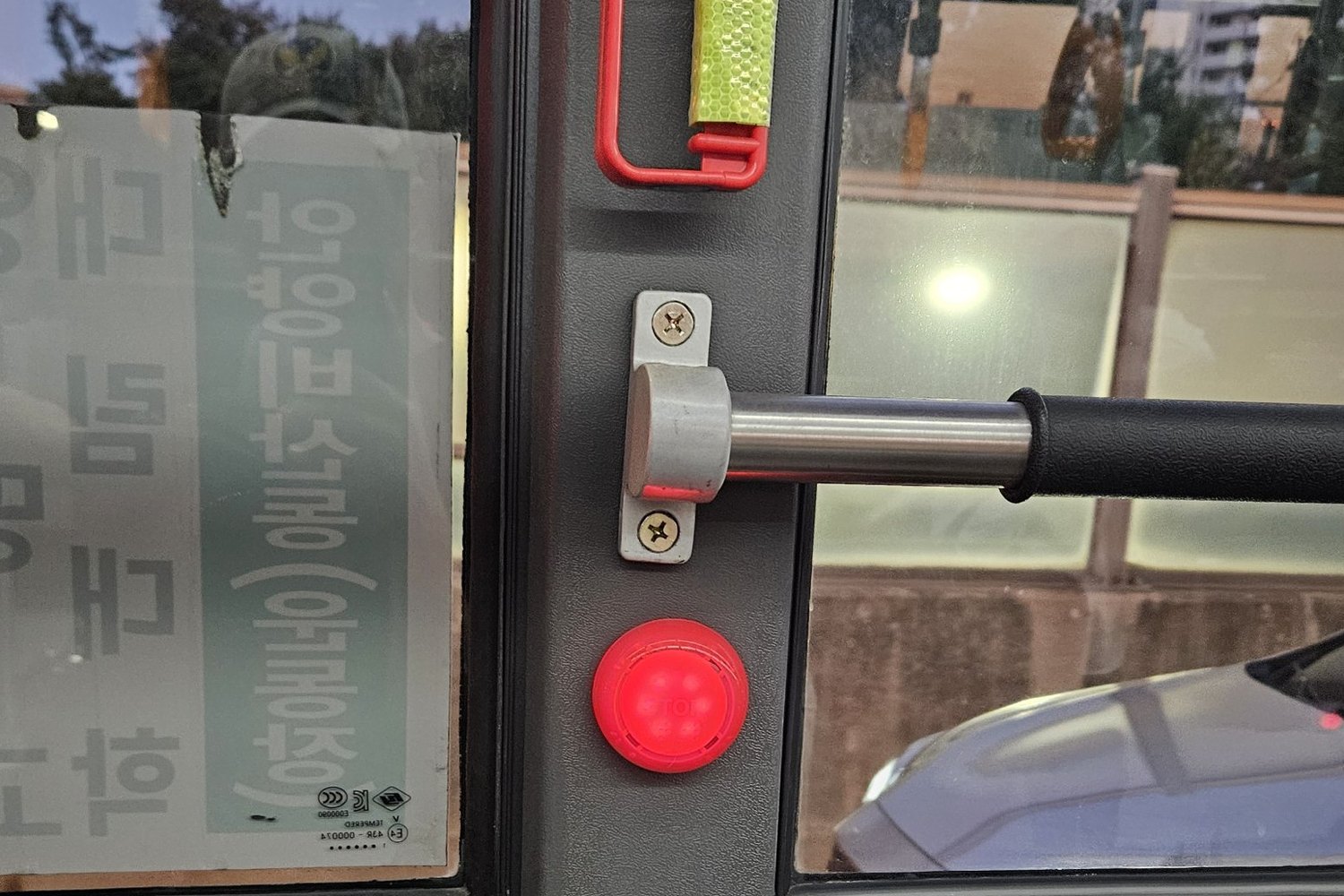
Press one of the red stop buttons (하차벨) before your stop. Look on the poles near the doors and along the bus. Then move to the back door, where you get off (뒷문).
Some bus announcements include English, but I couldn't confirm that every route has them. The safer way is to follow your trip on Naver Map or Kakao Map. Both have an alert that tells you when your stop is coming.
I took the two photos in this guide on a Seoul bus on September 29, 2026: the card reader and a red stop button.
Do I have to tap my card when I get off?
Yes. Tap it on the reader by the back door (뒷문) as you get off. It isn't a second fare. It records where you got off.
That record matters for two reasons.
- Transfers. If you tap out, you can board another bus or the subway within 30 minutes (60 minutes between 21:00 and 07:00) and pay little or nothing extra. You can transfer up to 4 times, so 5 rides in a row.
- Distance. Seoul charges a combined trip by total distance. The first 10 km are included in the base fare; after that you pay 100 won for every 5 km. The system needs your tap-out to know the distance.
Seoul's transfer guide warns that a missed tap-out breaks the transfer chain and you end up paying extra. And if you use a Climate Card, two missed tap-outs block the card for 24 hours, counted from the second one.
Two rules that catch people: a transfer doesn't count if you get back on the same route number, and the clock starts when you tap out, not when you got on.
Cash on Seoul city buses
On many buses, yes. The adult fare is the same as by card: 1,500 won on blue and green buses. But there are two catches.
- No transfer discount. The discount only works with a transit card. Pay cash and your next bus or subway ride is a full new fare.
- Cash-free buses. As of January 2026, 183 routes take no cash at all (현금 없는 버스). The city counted 396 city bus routes that month, so that is almost half. They carry a sign saying so. If you have no card, the bus has a notice with a bank account for paying by transfer, which isn't realistic for a visitor.
So carry a card, and keep a little won as backup for the buses that still take it.
Are there night buses in Seoul?
Yes. The Owl buses (올빼미버스) run from 23:00 to 06:00. Their numbers start with N, and the adult fare is 2,500 won by card. The city lists 14 routes and about 140 buses, coming every 10 to 40 minutes depending on the route.
They are useful after the subway stops, but they don't go everywhere. Check the route in Naver Map before you rely on one. A taxi is the other option late at night. See Uber and Kakao T in Korea.
What about airport buses and Gyeonggi buses?
Airport buses (공항버스) are a separate system with their own fares, and the Climate Card doesn't cover them. They are not the colour-coded city buses in this guide.
Buses from Gyeonggi Province, the region around Seoul, also run into the city. They look similar, but their fares are higher: since October 25, 2025, a regular Gyeonggi city bus costs 1,650 won by card. They still count for transfers. The Climate Card only works on buses licensed by Seoul.
Korean words on buses and in map apps
| English | Korean | Where you'll see it |
|---|---|---|
| Blue / green / yellow / red bus | 간선 / 지선 / 순환 / 광역 | Route type in map apps |
| Village bus | 마을버스 | Small green buses |
| Night bus | 심야버스 · 올빼미버스 | Routes starting with N |
| Stop button | 하차벨 | Red buttons on poles |
| Front door / back door | 앞문 / 뒷문 | Board front, exit back |
| Cash-free bus | 현금 없는 버스 | Sign on the bus |
| Transfer | 환승 | What the reader says when a transfer counts |
FAQ
How much is a bus in Seoul in 2026?
1,500 won for an adult on a blue or green bus, by card or cash. Yellow buses are 1,400, red buses 3,000, village buses 1,200 and night buses 2,500. These fares have been in place since August 12, 2023.
Do I need to tap out on Seoul buses?
Yes. Tap on the back-door reader as you get off. Without it you lose the transfer discount, and a Climate Card gets blocked for 24 hours after two misses.
How long do I have to transfer?
30 minutes after tapping out, or 60 minutes between 21:00 and 07:00. Up to 4 transfers, and not onto the same route number.
Which Seoul bus routes still take cash?
183 of the 396 city bus routes were cash-free in January 2026. Many of the rest take cash at the same adult price, and cash never gets a transfer discount.
For foreign cards on buses, see our contactless card guide.
Things I could not confirm:
- Whether every Seoul bus route announces stops in English, and on which screens.
- How much change a bus gives, or whether a driver will take a large note. Bring small notes or coins if you plan to pay cash.
- Whether the list of 183 cash-free routes has grown since January 2026. The city's list is dated January 2026.
- Route numbers after this year's route changes. Use a map app for the current number, not an old guide.
- How a visiting teenager or child gets the lower fare on a T-money card (whether the card has to be registered first).
Does cash work, can I just tap: those are the first things I want to know in any new city. In Seoul, bring a transit card, and tap it twice.
More on riding the Seoul subway and buses
Sources
- Seoul Metropolitan Government, bus fares by type, card and cash: sftc.seoul.go.kr and news.seoul.go.kr
- Seoul Metropolitan Government, city bus system and how to ride (updated Mar 9, 2026): news.seoul.go.kr
- Seoul Metropolitan Government, integrated transfer discount: news.seoul.go.kr
- Seoul Metropolitan Government, Climate Card tap-out rule: news.seoul.go.kr
- Seoul Metropolitan Government, Owl night buses (updated Mar 20, 2026): news.seoul.go.kr
- Seoul Metropolitan Government, cash-free bus routes (as of Jan 2026): news.seoul.go.kr and how they work: mediahub.seoul.go.kr
- Seoul Metropolitan Government, takeaway drinks on buses: news.seoul.go.kr
- Seoul Metropolitan Government, Climate Card coverage (updated Sept 28, 2026): news.seoul.go.kr
- Kyunghyang Shinmun on Gyeonggi bus fares from Oct 25, 2025: khan.co.kr
— SeoulAslan


Comments
Post a Comment