

 SetPaying for Seoul transport
 Hi, I’m SeoulAslan
T-money vs Climate Card vs WOWPASS: Which to Get (2026)
Checked Sept 30, 2026
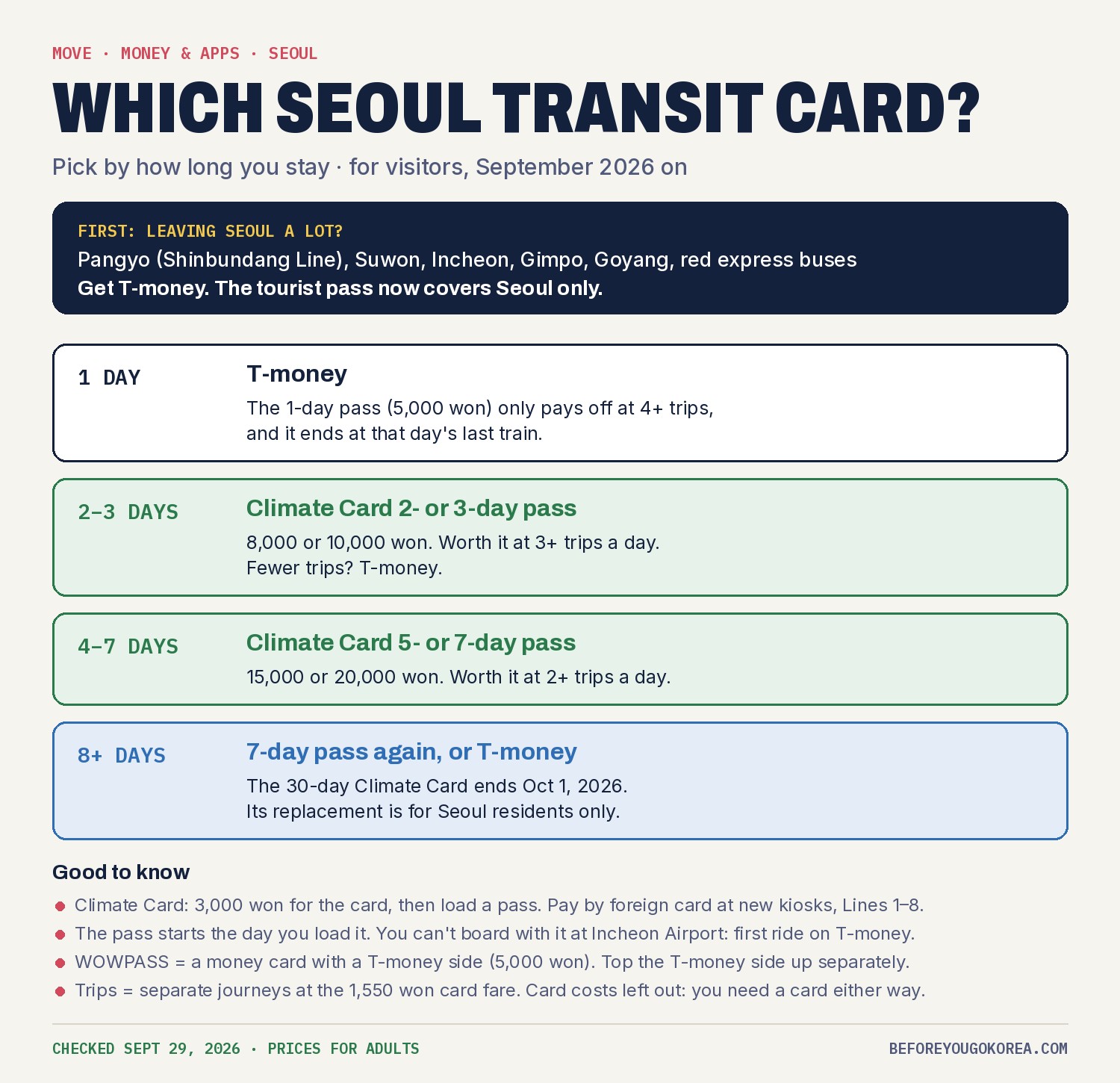
For most visitors staying 2 to 7 days and riding mostly inside Seoul, the Climate Card tourist pass wins. It costs 8,000 to 20,000 won for 2 to 7 days of unlimited subway and bus rides, plus 3,000 won for the card, and you can pay with a foreign card.
T-money is better for one day, for light riders, and for anyone heading out of Seoul, because since September 2026 the pass covers Seoul only. WOWPASS is a money card first. Its T-money side works like any T-money card.
Where do I buy a pass? That's the last of the five things I check before every trip abroad. For Seoul, the answer depends on two numbers: how many days, and how many rides a day.
Jump to: What's the difference? · By length of stay · What changed in Sept 2026 · Pass rules that catch visitors · Is WOWPASS worth it? · FAQ
What's the difference between T-money, the Climate Card and WOWPASS?
| T-money | Climate Card tourist pass | WOWPASS | |
|---|---|---|---|
| What it is | Pay-as-you-go transit card | Unlimited rides for 1 to 7 days | Currency exchange and payment card with T-money built in |
| Card cost | A few thousand won, by design | 3,000 won | 6,000 won |
| Ride cost | 1,550 won subway, 1,500 bus (adult) | 5,000 to 20,000 won per pass | Same as T-money |
| Top up with | Cash at stations and stores | Cash or card at new kiosks | Transit side: cash, or in-app (see below) |
| Where it works | Buses, subways and taxis nationwide | Seoul subway and Seoul buses only | Same as T-money |
T-money (티머니) is the standard card. Convenience stores (GS25, CU, 7-Eleven, emart24) sell it and top it up with cash. It gives you the bus–subway transfer discount and works outside Seoul. T-money's own visitor version, the TMONEY TRAVEL CARD, costs 4,000 won.
The Climate Card tourist pass (기후동행카드 단기권) is a Seoul city pass. You buy the card (3,000 won) and load a pass: 5,000 won for 1 day, 8,000 for 2, 10,000 for 3, 15,000 for 5 or 20,000 for 7. Then you ride Seoul's subway and Seoul city and village buses as much as you like.
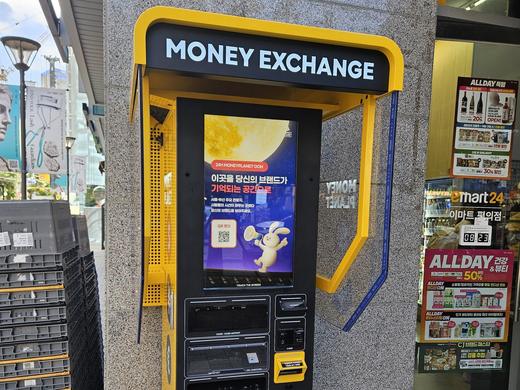
WOWPASS is a prepaid card for visitors. You exchange money at its kiosks and pay in shops with it. The first card costs 6,000 won at a WOWPASS machine (up from 5,000 on March 4, 2026), and its ATM withdrawals are up to 100,000 won at a time for a 1,000 won fee. Its T-money balance is separate from its shopping balance.
Which one should I get for my length of stay?
First question: are you leaving Seoul a lot? Pangyo on the Shinbundang Line, Suwon, Incheon, Gimpo, Goyang, the red express buses: the pass doesn't cover them. Get T-money.
If you're mostly in Seoul, count your trips. A "trip" here is one journey at the 1,550 won card fare, since a transfer inside the time limit doesn't cost a second fare.
- 1 day: T-money. The 5,000 won pass beats T-money only at 4 or more trips (4 × 1,550 = 6,200 won). It also ends at that day's last train.
- 2 to 3 days: the 2-day (8,000 won) or 3-day pass (10,000 won) if you take 3 or more trips a day. At 2 trips a day, T-money is cheaper.
- 4 to 7 days: the 5-day (15,000 won) or 7-day pass (20,000 won). At 3,000 and about 2,860 won a day, 2 trips a day already beats T-money.
- 8 days or more: another 7-day pass after the first, or T-money. The 30-day Climate Card is gone, and the monthly product that replaced it is for Seoul residents.
The math leaves out card costs, because you need a card either way. The 3-day pass is the favourite: in the first month after foreign cards were accepted, 35% of tourist passes sold were 3-day passes, and 24% were 5-day.
What changed in September 2026?
- The 30-day Climate Card is ending. Loading closed on Aug 31. Prepaid cards could be used until Sept 29 and postpaid until Sept 30. The city ends it on Oct 1, 2026. A guide that still offers visitors a monthly Climate Card is out of date.
- The tourist pass stays, in its 1, 2, 3, 5 and 7-day versions, at the same prices.
- The pass now covers Seoul only. Gimpo, Goyang, Gwacheon, Guri, Seongnam, Hanam and Namyangju were dropped. Reports date the change to Sept 1, 2026. You can still get off at Incheon Airport.
- The replacement is not for visitors. The new 기후동행패스 (Climate Pass) works through the government's 모두의카드 (K-Pass) transit refund card. The city says it applies to Seoul residents only.
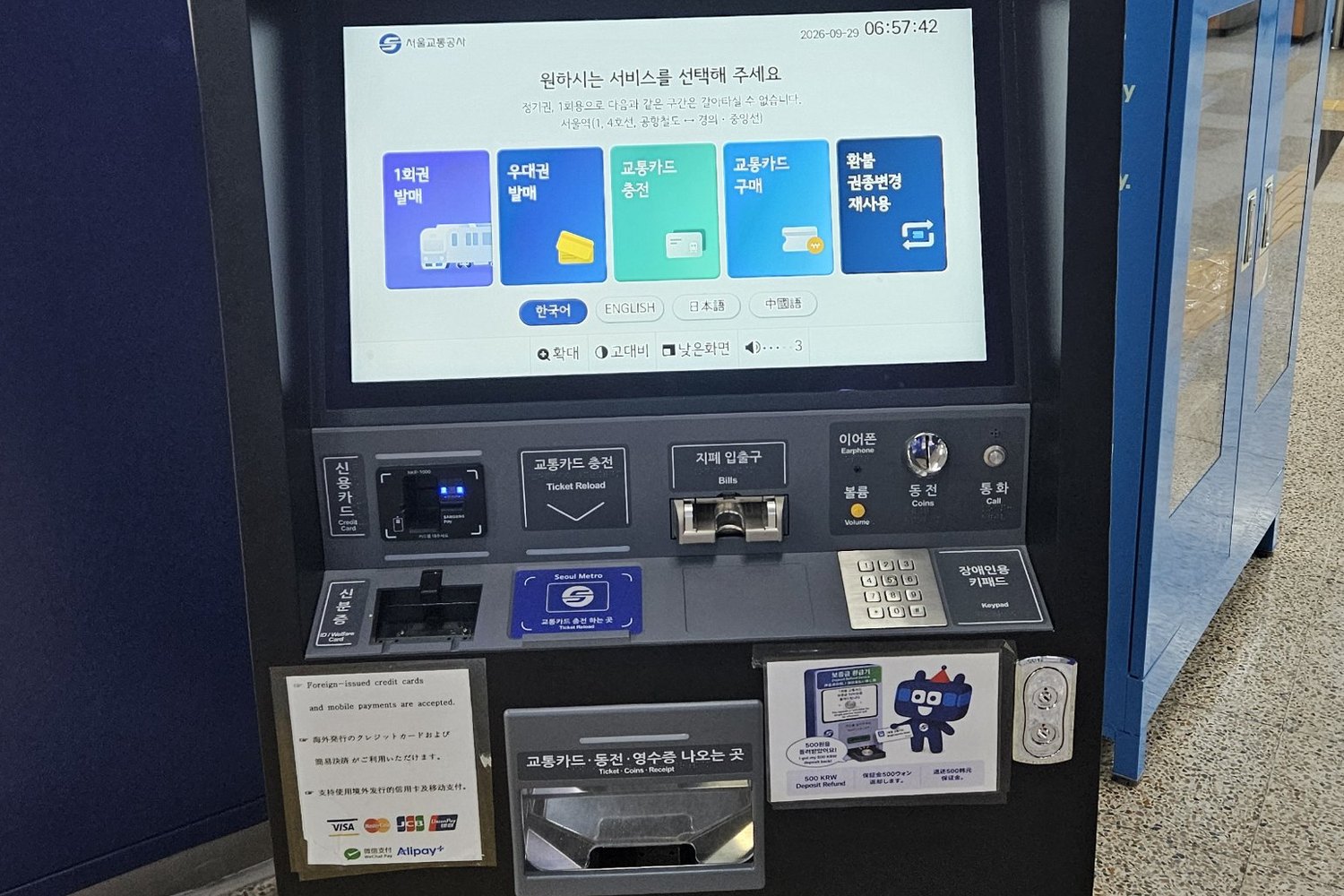
When I photographed the ticket kiosks on Sept 28 and 29, 2026, a banner on them was about Climate Card paybacks moving to 모두의카드 (K-Pass). That banner is for residents: it covers a cash-back on the old monthly card and the switch to K-Pass. As a visitor you can ignore it. Nothing about the tourist pass changes because of it.
What are the Climate Card rules that catch visitors?
- 1 day means until the last train, not 24 hours. The city's example: load a 1-day pass on July 1, and it works until the last train on July 1. Load it in the morning.
- It starts the day you load it. You can't load it in advance for a later date.
- You can't board at Incheon Airport with it. You can ride it to Incheon Airport Terminals 1 and 2 and get off. On arrival day, take your first ride on T-money or a single ticket.
- Not covered: the Shinbundang Line, GTX, subways outside Seoul, red express buses, airport buses, and buses licensed outside Seoul. Get off at a station outside the area and staff charge you the fare from where you boarded.
- No bikes or boats. Ttareungyi bikes and the Han River Bus are not part of the tourist pass.
- iPhone users need the plastic card. The city lists the mobile version for Android only (Android 12 or later).
- Refunds are awkward. The refund is what you loaded, minus what you rode, minus 500 won, and nothing after the pass expires. It goes to a Korean bank account, so visitors without one have to go to T-money's head office. And register the plastic card on the T-money Card&Pay website first: the city says an unregistered card can't be refunded.
Buy the card at the new kiosks on Lines 1 to 8, or at convenience stores near Line 9, Ui–Sinseol and Sillim Line stations. Foreign cards work only at the kiosks.
Is WOWPASS worth it just for transport?
Not on its own. For rides, the T-money side of a WOWPASS works like a plain T-money card, at the same fares. Its value is the rest: exchanging cash at a kiosk and paying in shops without a Korean card.
Watch the two balances. Money you load for shopping doesn't pay the subway on its own. WOWPASS's November 2025 guide says you can move money to the T-money side in its app by holding the card to your phone. Its FAQ page still says you can't, and that the T-money side is topped up with cash. Try the app, and keep some cash as a backup.
T-money also sells a TMONEY TRAVEL CARD+ for 6,000 won, which combines a T-money card with WOWPASS payments.
FAQ
Which Climate Card passes can tourists still buy?
Yes. The 1, 2, 3, 5 and 7-day tourist passes continue. Only the 30-day card ends, on Oct 1, 2026.
Is the Climate Card 1-day pass 24 hours?
No. It runs until the last train on the day you load it.
Do I need a T-money card if I buy a Climate Card?
Usually yes, a cheap one. You need it for the airport ride and for trips outside Seoul.
Boarding the Climate Card at Incheon Airport and paying for it with a foreign card are answered in our Climate Card guide.
Things I could not confirm yet:
- The exact date the pass stopped covering Gimpo, Goyang and the other Gyeonggi stops. The city's pages say "Seoul only"; Dong-A Ilbo dates it Sept 1, 2026.
- Whether WOWPASS's in-app T-money top-up works on every phone.
- Whether M-PASS, a foreigner-only pass VisitKorea still lists, is on sale.
- Prices of plain T-money cards at convenience stores. They vary by design.
Pass or card is the last question on my list before a trip. For most visitors to Seoul, it comes down to how many days and how many rides.
More on paying for Seoul transport
- Can You Tap a Contactless Card on Seoul Transit? (2026)
- Do You Need Cash for Seoul Transport? (2026)
- T-money in Apple Wallet with a Foreign Card (2026)
- Seoul Climate Card Tourist Pass Explained (2026)
- Can You Buy T-money at Incheon Airport When You Land? (2026)
- T-money Refund: How to Get Your Balance Back (2026)
- Seoul Transport Cost for 3, 5 or 7 Days (2026)
Sources
- Seoul Metropolitan Government, Climate Card and tourist pass: prices, card cost, range, validity, refunds (updated Sept 28, 2026): news.seoul.go.kr
- Seoul Metropolitan Government, 30-day Climate Card end FAQ: news.seoul.go.kr
- Seoul Metropolitan Government, Climate Pass Q&A, tourist pass range (updated Sept 17, 2026): mediahub.seoul.go.kr
- Seoul Metropolitan Government, Climate Pass is for Seoul residents (Sept 1, 2026): news.seoul.go.kr
- Seoul Metropolitan Government, 30-day pass end and payback notice: news.seoul.go.kr
- Dong-A Ilbo via Daum, 15 changes from September (Aug 18, 2026): v.daum.net
- Seoul Metropolitan Government, foreign cards at 440 new machines: news.seoul.go.kr
- Newspim, first month of foreign-card sales and pass shares (Apr 22, 2026): newspim.com
- Seoul Price Information, subway fares: sftc.seoul.go.kr
- T-money, cards for foreign tourists: tmoney.co.kr
- WOWPASS FAQ: wowpass.oopy.io and service guide (Nov 2025): wowpass-event.oopy.io
— SeoulAslan


Comments
Post a Comment