
 SetPaying for Seoul transport
 Hi, I’m SeoulAslan
Gyeonggi Ceramics Biennale 2026: Tickets, Venues and How to Go
Checked Oct 11, 2026
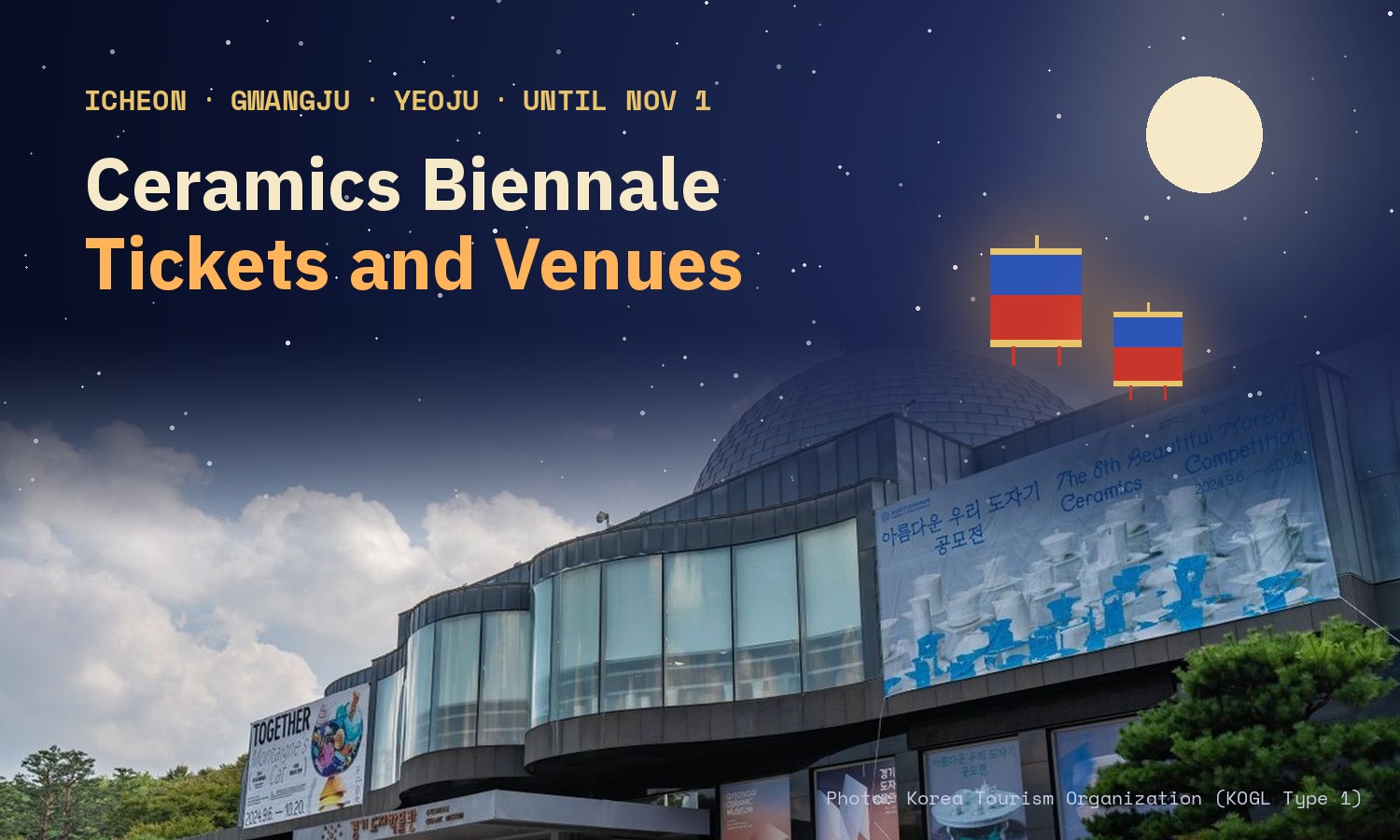
The Gyeonggi Ceramics Biennale (경기도자비엔날레) is a ceramics art festival held every two years across three towns east of Seoul, Icheon, Gwangju and Yeoju, from Sept 18 to Nov 1, 2026. It is open daily from 10:00 to 18:00, with last entry at 17:00. An All Pass for the three venues costs 7,000 won if you book ahead and 11,000 won if you pay on the day, and you can pay on the day. Booking is through Naver Reservation or Ticket Link. The festival has an official English site, but I could not find a travel time from Seoul, and some English pages still show Korean text.
I'm from Korea and I like hunting for places around the country, but I haven't been to this biennale. Everything here comes from the festival's official English and Korean pages, not from a visit.
Jump to: What it is · Which venue? · Hours · Tickets and cost · Can foreigners book? · Workshops · Getting there · FAQ
What is the Gyeonggi Ceramics Biennale, and why is it famous?
It is a ceramics festival run by Gyeonggi Province and the Korea Ceramic Foundation, and it takes over three museums at once. The festival says its international competition has run 13 times from 2001 to 2026 and normally draws about 1,500 artists from around 70 countries. For 2026, 1,050 artists from 77 countries sent in 1,397 works, and 58 were selected for display. That competition is the reason it counts as an international event and not only a local craft fair.
This year's theme is "Earth Makes". The idea, in the festival's words, is that clay is a partner and not a passive material: heat, gravity and chemical reactions shape a work together with the artist. The main show is curated by Artistic Director Daehyung Lee and has three chapters: Made from Earth, Made by Earth and Made in Earth. It includes a special section called Focus Australia. The official count for the main show is 28 teams (65 artists) from 14 countries.
Which of the three venues should you visit?
Each venue has a different show, so it helps to pick one if you only have a day. The official pages describe them like this:
| Venue | What is on | Good for | Naver Map |
|---|---|---|---|
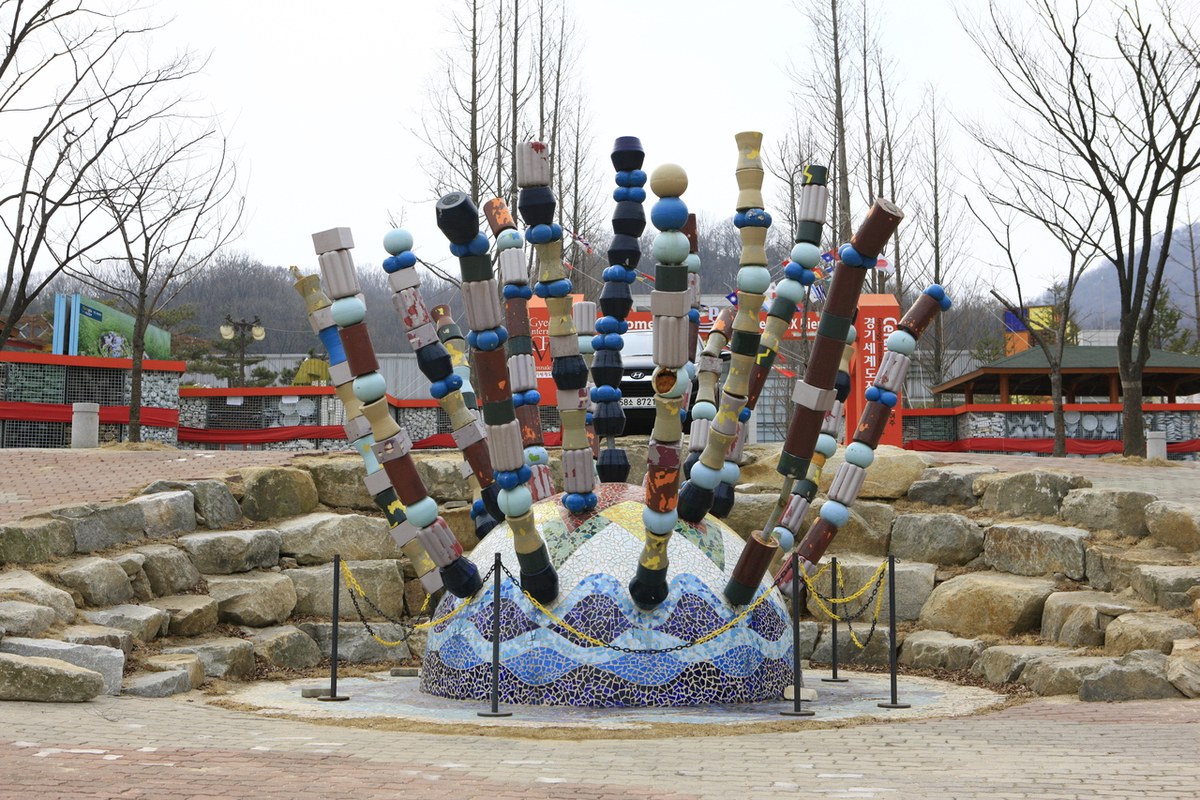
| Icheon · Gyeonggi Museum of Contemporary Ceramic Art (경기도자미술관) | The main show "Earth Makes" in Galleries 2 and 3, the lobbies and outdoors. A chicken-themed student show, DADADAK, on the 3rd floor, with about 240 works from 30 art universities in five countries. | Contemporary art, the "headline" show | Open |
| Gwangju · Gyeonggi Ceramic Museum (경기도자박물관), in Gonjiam Ceramic Park | Special show "Living Legacy: Masters of Korean Ceramics Today" (64 works), an award show with 37 works from a Korean ceramics competition, and the museum's collection on Korean ceramics from the Goryeo period to today. A kids' area, Kids Biennale "EARTH PLAYLAB", runs on weekends and holidays. | Traditional Korean ceramics, families with small children | Open |
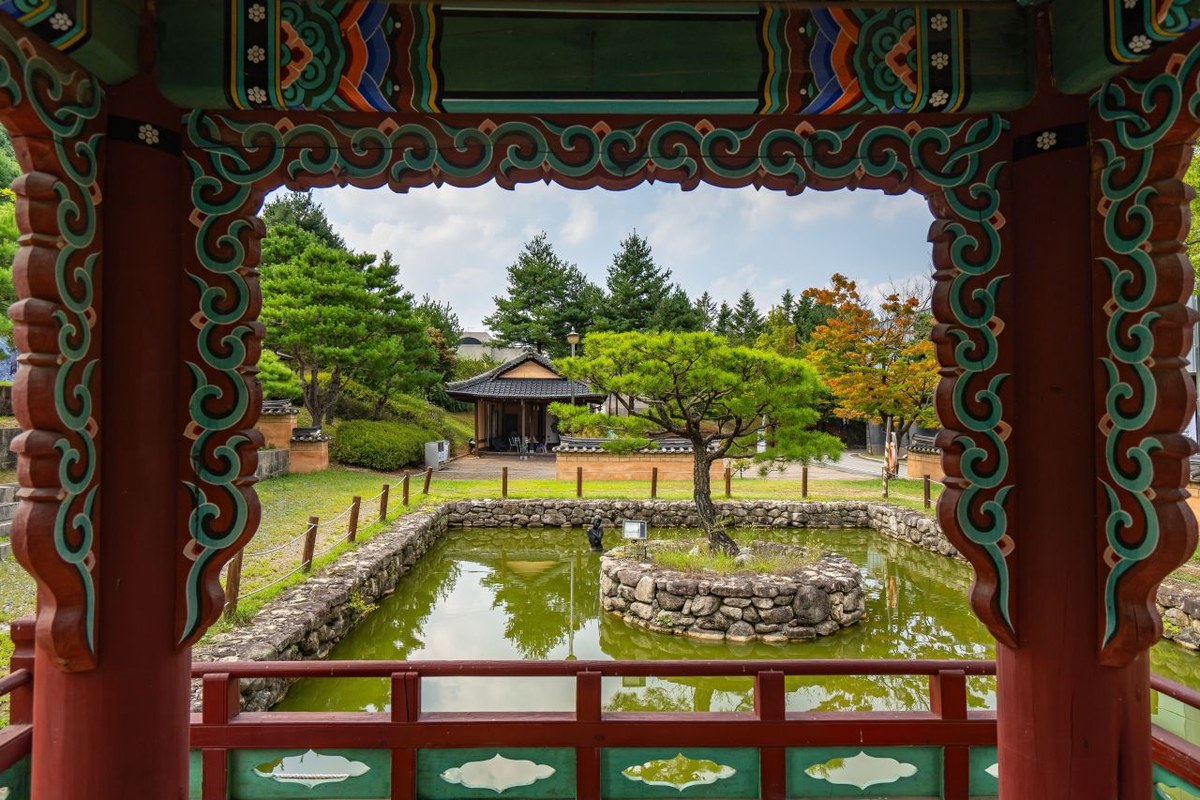
| Yeoju · Gyeonggi Museum of Ceramic Design (경기생활도자미술관), at Silleuksa Temple | Special show "Original Essence, Unfamiliar Tradition" (5–6 contemporary artists, about 60–100 works) on the 2nd floor, plus a collection show, "Forms of Eternity", built around the vessel form, in Galleries 1 and 2. | Pairing a temple visit with a small museum | Open |
- All three in one day is tight. The three venues are in three different towns, and I did not find a connecting shuttle or a suggested route on the official pages. I would not plan more than two.
- After Nov 1. The English page for the international competition lists it through Feb 14, 2027, and the Yeoju show through Mar 31, 2027 (marked "TBC"). The pages do not say whether the venues' regular admission applies after Nov 1, so check before you go in winter.
What are the opening hours?
The official English page says "Open daily" from Sept 18 to Nov 1, 10:00 to 18:00, with last admission at 17:00. The Korean visitor page agrees. The Icheon workshop rooms are listed as 10:00 to 17:00, so they close an hour earlier. If you aim for a late-afternoon visit, you will have under an hour inside, so go in the morning if you can.
How much does the biennale cost?
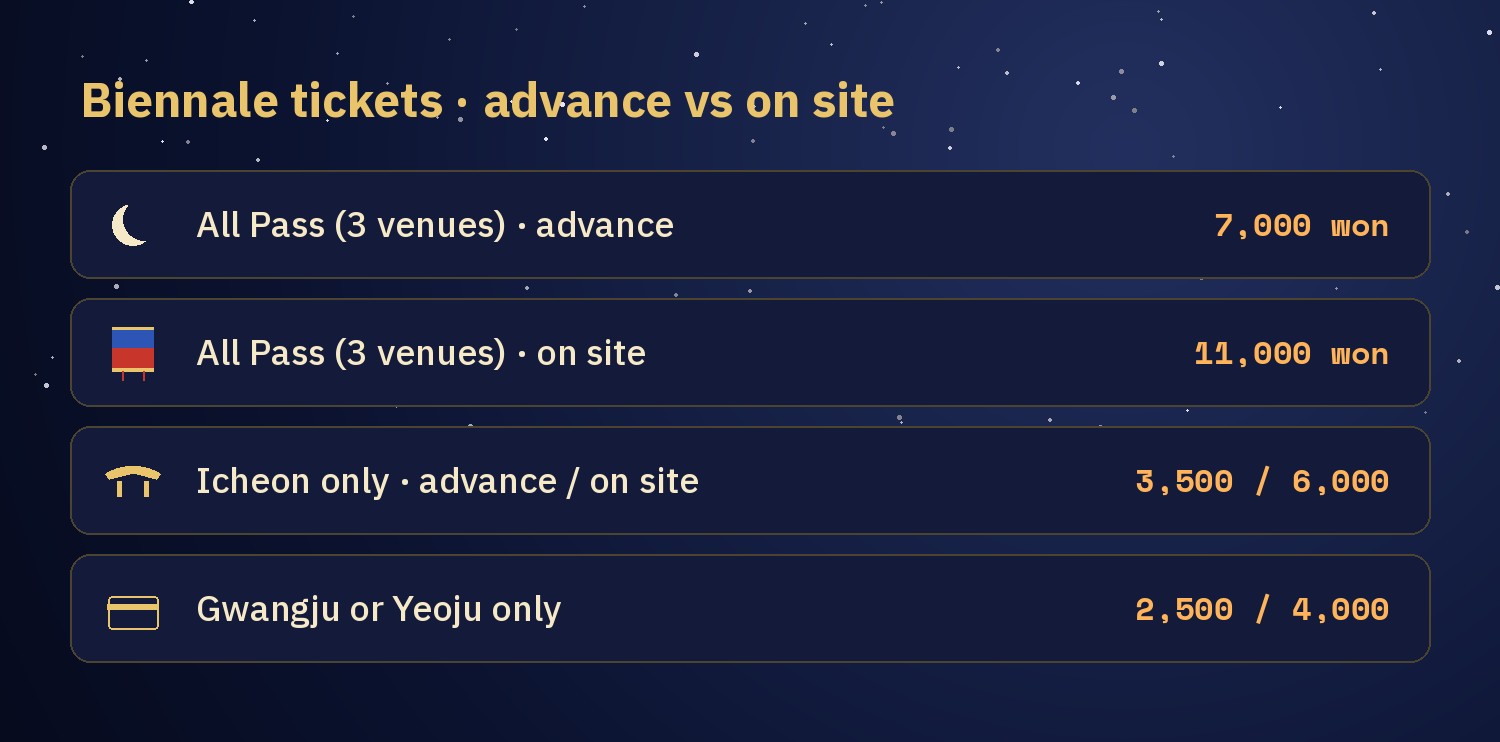
| Ticket | Adults (19–64), advance | Adults (19–64), on site | Discount, advance / on site |
|---|---|---|---|
| All Pass (3 venues) | 7,000 won | 11,000 won | 4,000 / 7,000 won |
| Icheon only | 3,500 won | 6,000 won | 2,000 / 3,500 won |
| Gwangju or Yeoju only | 2,500 won | 4,000 won | 1,500 / 2,500 won |
- Booking ahead saves 4,000 won on the All Pass.
- Discount tickets are for ages 7 to 18, holders of the Culture Card, Gyeonggi Province residents, college and graduate students majoring in fine arts, crafts or ceramics, and groups of 20 or more.
- Free for children 6 and under and for people 65 and over, plus several other groups such as veterans, people with disabilities and ICOM or Artist Pass card holders. The page does not say what proof is checked.
- Not stated: whether an All Pass can be split across two days. Ask the venue before you buy.
Can foreigners book the Ceramics Biennale?
The festival does not say either way, and I could not open its booking pages to check. The visitor page lists Naver Reservation and Ticket Link for advance tickets, and it also gives on-site prices, so paying at the venue is clearly an option.
- Easiest fallback: pay on the day. You lose 4,000 won on the All Pass but you avoid any sign-up problem.
- Naver has a passport route. Naver announced on June 9, 2026 that foreign users with a passport issued outside Korea can verify on a smartphone without a Korean mobile number and use services like Naver Reservation (Naver press release). Whether the biennale's booking page accepts it is not stated.
- Not stated anywhere I could find: the language of the booking pages, whether a foreign card pays, and whether Ticket Link has an English version.
- The official site has an English version. The visitor information, the main exhibition and the special exhibition pages are in English. The workshops page on the English site is still in Korean, so use a translation tool there.
For questions before you go, the three venue numbers are in the table above. Naver Map covers the routes, as explained in the Naver, Kakao and Google map comparison.
Can you try making pottery?
Yes, but some of the festival's programs have already ended or ended soon. According to the official Korean workshop page:
- Wheel-throwing at Icheon (1-on-1 with an instructor, 30,000 won) was listed only Sept 24 to Oct 11, weekends and holidays, so it is over.
- Hand-painting at Icheon (25,000 to 60,000 won) is listed as running every day until Nov 1, four sessions a day, for anyone. Booking is on Naver Reservation, and on-site sign-up is possible if seats are left.
- Family bowl-making at Gwangju (2 people 30,000 won, 3 to 4 people 40,000 won, ages 6 and up) is on weekends and holidays through Nov 1.
- Kids' "Imagination Clay Warehouse" at Gwangju is a 90-minute play program for toddlers through elementary school with a parent. The page lists 5,000 won, or 6,000 won with museum entry, for general booking, and asks you to bring a change of clothes and a towel. Weekends and holidays only.
- The free Icheon "participatory workshops" run only Sept 18 to Oct 18, and only for people who bought an Icheon ticket in advance. After Oct 18 they are over.
The festival's partner events, such as the Seolbong ceramics fair in Icheon (Oct 3 to 18, weekends and holidays), mostly finish by Oct 18. If you go in the last week, look at the festival's "What's on" calendar for that day.
How do you get to the Ceramics Biennale from Seoul?
All three venues are reachable from stations on the Gyeonggang Line, which the festival calls "an art journey by subway". The official pages do not give a travel time from Seoul, and I could not find a second source, so put your hotel and the venue into Naver Map or Kakao Map and check the time for your start point.
| Venue | By subway and bus | Naver Map |
|---|---|---|
| Gwangju · Gonjiam Ceramic Park | Gonjiam Station (Gyeonggang Line), then bus 300, 1113-1, 500-1 or 114 to "Gonjiam Ceramic Park". Intercity buses also run from Dong Seoul Terminal (1113-1), Jamsil Station (500-1) and Nambu Terminal (500-2) to the same stop. Address: 727 Gyeongchung-daero, Gonjiam-eup. | Gonjiam Station · Open |
| Icheon · Seolbongsan | Icheon Station, then local bus 29-40, 28-5, 20-3, 25-1, 28-8 or 20-1 to "Seolbongsan Entrance", then about 25 minutes on foot. Address: 263 Gyeongchung-daero 2697beon-gil. | Icheon Station · Open |
| Yeoju · Silleuksa Temple | Yeoju Station, Exit 1, then bus 981, 175, 987-3, 988-2, 991, 992, 995, 130, 911-1 or 911-5 to "Silleuksa Temple", then about 7 minutes on foot. Address: 7 Silleuksa-gil. | Yeoju Station · Open · Silleuksa |
- The Icheon walk is the long one. From the bus stop it is about 25 minutes on foot, so allow time. The official page also lists intercity and express buses to Icheon, with different stops, if you start from a bus terminal.
- By car. The official page gives expressway directions for Icheon and Gwangju. For Icheon, exit at Seongnam IC from the Seoul Ring Expressway or at West Icheon IC from the Jungbu Expressway, then follow National Route 3. For Gwangju, exit at Seongnam IC from the Ring Expressway or at Gonjiam IC from the Jungbu Expressway, then follow National Route 3 toward Icheon. Parking details are not stated.
- Last buses: not stated. Check the return buses in Naver Map before you go, because the biennale closes at 18:00 but the local buses are less frequent than the subway.
FAQ
Is the biennale open on Mondays?
Yes. The official page says it is open daily during the festival, Sept 18 to Nov 1.
How long should I allow at the biennale?
The festival does not give a visit length. The main show in Icheon takes up two galleries, the lobbies and an outdoor area, and Gwangju and Yeoju each have several exhibitions, so plan a half day per venue.
Is the biennale good for children?
Gwangju is the one set up for it, with the Kids Biennale area on weekends and holidays. Children 6 and under get in free.
Is there an audio guide in English?
The English site has an "Audio Guide" section. I did not open it, so I cannot say which languages it offers.
Do I need a Korean phone number to book the biennale?
The festival does not say. Naver's passport verification, announced in June 2026, is meant to remove that barrier for foreign users, but I could not confirm that this booking page accepts it. Paying on site avoids the question.
Hours near the Nov 1 closing
I'll look again at the festival's notices for any change to the hours near the Nov 1 closing, at the English workshop page in case it gets translated, and at whether the booking pages mention foreign visitors. I'll update this guide if they do.
Sources
- Gyeonggi Ceramics Biennale 2026, official English site, checked Oct 11, 2026: Visitor Information · Overview · Main Exhibition · International Competition · Special Exhibition · Partner Events
- The same festival's workshop page, Education / Public Workshops (shown in Korean), and the Korean visitor guide at gcbiennale.org
- Korea Ceramic Foundation, kocef.org (Korean), for the venues and the festival's organizer
- Naver press release, passport verification for foreign users, Jun 9, 2026
- Photos: Korea Tourism Organization photo gallery, Korea Open Government License Type 1 (credited; cropped to size)
— SeoulAslan


Comments
Post a Comment